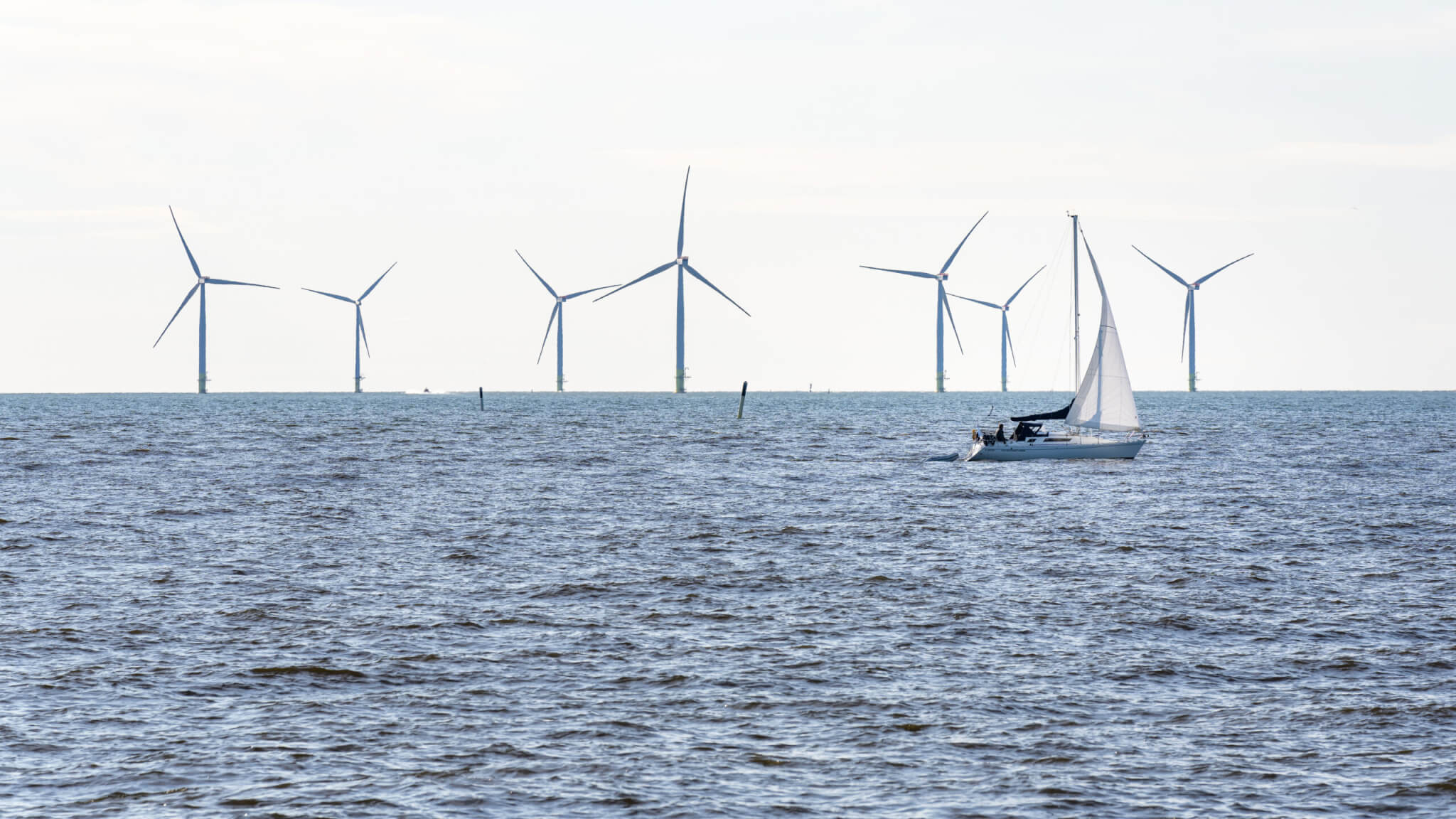
The Government will submit to Parliament a proposal on the property and income taxation of offshore wind power. Renewables Finland welcomes the progress of the proposal and considers it crucial for enabling the development of offshore wind in Finland. Finalising the tax model for the exclusive economic zone (EEZ) is particularly important ahead of Finland’s first offshore wind auction in the EEZ.
Offshore wind turbines generate electricity more steadily than onshore turbines, but their construction costs are significantly higher. Foundation and construction costs are substantially greater, and rising steel prices following Russia’s war of aggression, along with higher interest rates, have further weakened project economics. At the current cost level, offshore wind projects in Finland are not financially viable without tax reform.
Property tax moderation is essential
Under the current system, property tax for offshore wind in territorial waters is significantly higher than for onshore wind, even when accounting for higher electricity output. Renewables Finland therefore considers it well justified to moderate offshore wind property taxation.
The Government proposal, which would reduce the initial replacement value from 75% to 35% for offshore wind, is a clear improvement. However, as the tax burden would still remain significantly higher than for onshore wind, Renewables Finland considers it justified to lower the level further to 30%.
“It is important that taxation remains neutral and does not artificially steer the location of electricity production or technology choices. Our objective of equal tax treatment relative to electricity output is therefore well founded,” says Anni Mikkonen, CEO of Renewables Finland.
Municipalities will continue to benefit significantly
Despite the proposed tax moderation, municipalities will continue to benefit substantially from offshore wind. The annual property tax revenue from a single offshore wind turbine will remain clearly higher than that of onshore wind.
If offshore wind construction takes off in Finland, it will generate not only long-term tax revenues for municipalities but also employment and broader regional economic benefits. The tax framework must ensure that projects are realised. Excessively high taxation risks halting investments altogether, in which case no tax revenues would be generated.
“This is not about taking away tax revenues already promised to municipalities or the state, but about ensuring that offshore wind projects become economically viable by aligning property taxation more closely with onshore wind,” Mikkonen adds.
EEZ tax model must be resolved before auction
Renewables Finland emphasises that the tax model for the exclusive economic zone must be finalised before Finland’s first offshore wind auction in the EEZ. Projects in the EEZ are located further offshore and in deeper waters, making them significantly more expensive than those in territorial waters. Taxation should not penalise projects in technically more demanding – and often environmentally less sensitive – areas.
The entry into force of the legislative changes cannot be delayed. Without clarity on future taxation, the auction will lack credibility and investors will be unable to assess total project costs.
Read more about the proposal on the Ministry of Finance website (in Finnish)
More information