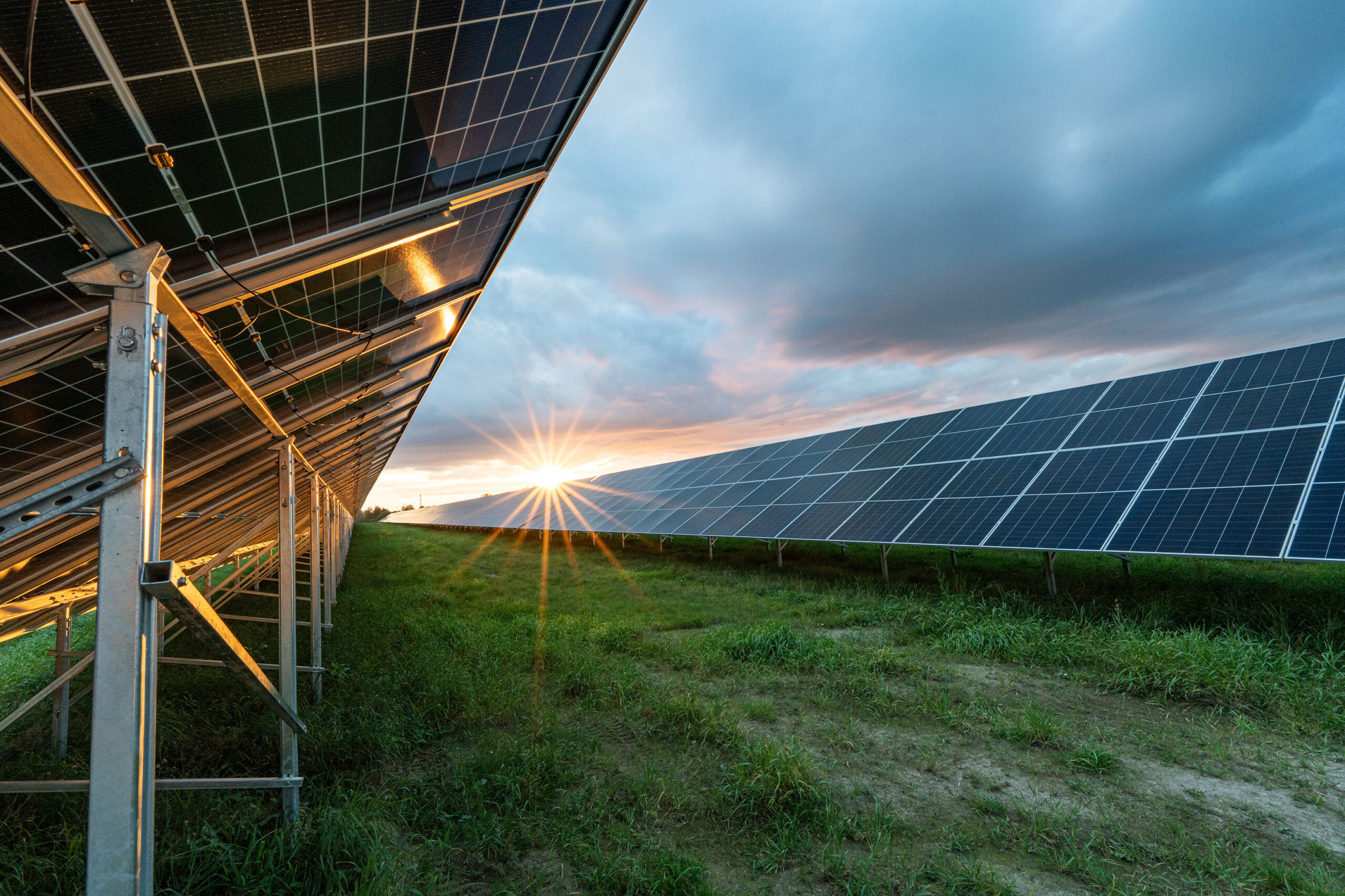
The year 2025 was a record year for industrial-scale solar power construction in Finland: 227 megawatts of new capacity were completed, and the country’s total capacity more than doubled. Solar power is rapidly emerging as a credible part of Finland’s clean electricity generation mix.
In 2025, seven new industrial-scale solar power plants were completed in Finland, adding 227 megawatts of solar capacity. By the end of the year, the total installed industrial-scale solar power capacity was approximately 352 megawatts. Growth has been rapid, and the pace of development now clearly shows that solar power can be built at an industrial scale even in northern conditions.
At present, most of Finland’s industrial-scale solar power capacity is located in Northern Ostrobothnia. However, when looking at regional figures, it should be noted that the overall capacity is still relatively small, meaning that individual large projects have a significant impact on the statistics.
Finland’s largest solar power plant is the 107-megawatt project completed in Utajärvi in 2025, which accounts for nearly one third of the country’s total industrial-scale solar capacity. The second largest is the 70-megawatt solar power plant completed in Simo. These are also Finland’s first completed solar power plants exceeding 50 megawatts, and the Utajärvi project is the country’s first solar power plant exceeding 100 megawatts.
“It is fair to say that large projects like those in Utajärvi and Simo have a strong impact on regional statistics at this stage. However, the solar power sector is still developing, and in the future capacity will likely be distributed more evenly across different parts of Finland,” says Klaara Tapper, Advocacy manager at Renewables Finland.
A key issue for the growth of solar power is the zoning threshold outlined by the Government in the Land Use and Building Act, which applies to large projects of more than 50 hectares. In the future, the importance of this threshold will increase as project sizes grow.
“Solar power is currently moving into a new phase. As project sizes increase and electricity demand rises due to the electrification of industry, it is important to ensure that regulation supports investments and does not unnecessarily slow down solar power construction. Requiring zoning is not justified in all areas, which is why the zoning threshold should be raised. This would help ensure continued success for Finland’s fastest-growing form of electricity generation. Raising the zoning threshold significantly would not, however, rule out zoning smaller projects near population centers,” Tapper says.
Download Solar Power Statistics 2025
More information