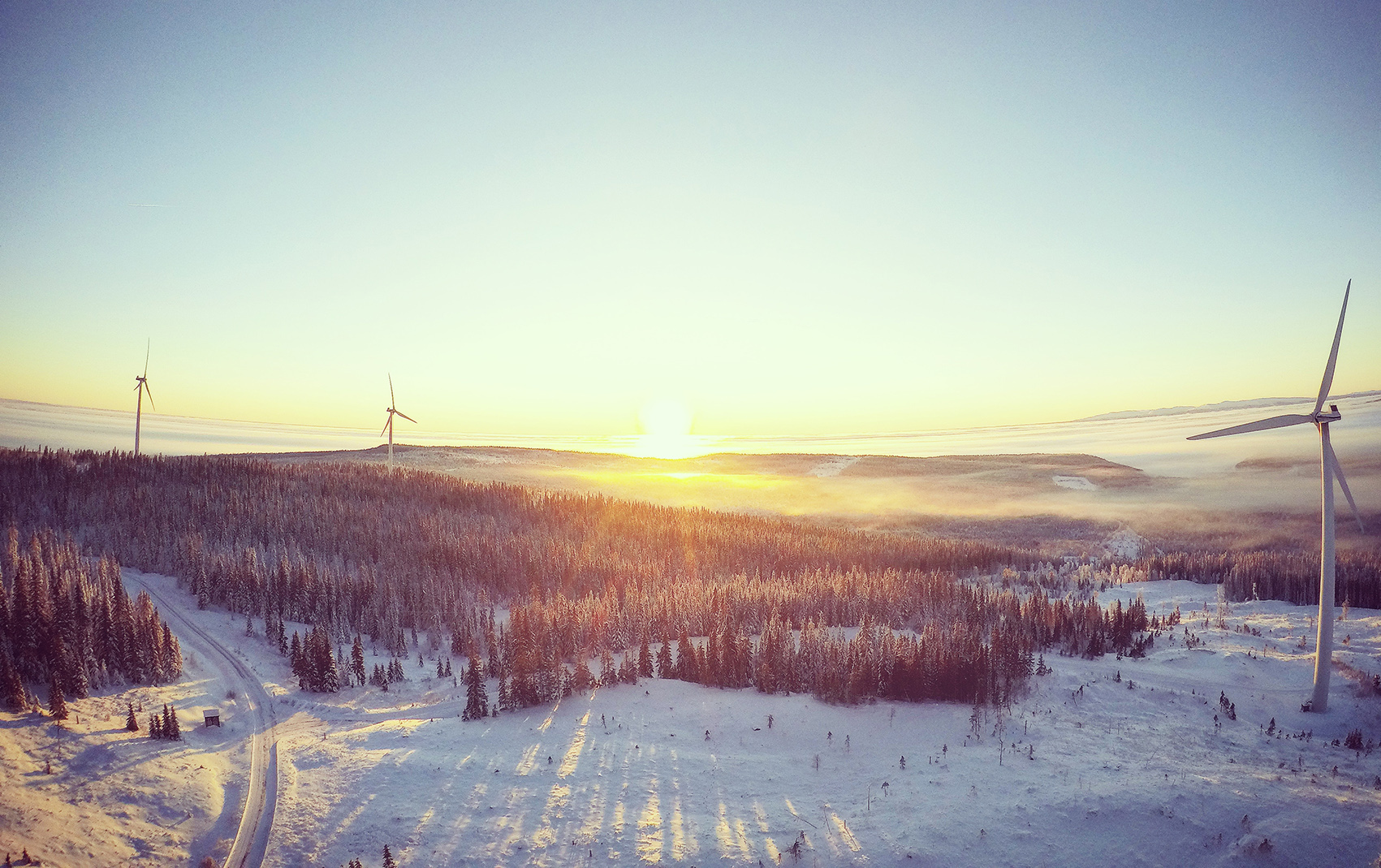
Finland has reached a significant milestone in renewable energy: the combined capacity of domestic wind power and utility-scale solar power has exceeded 10 gigawatts (GW). This is three times the total capacity of Finland’s hydropower and corresponds to roughly 6–10 large nuclear reactor units. Fast-to-build and cost-effective wind and solar power are key drivers of Finland’s energy transition and enable investments in clean industry.
The growth of Finland’s wind and solar sectors has been rapid. Wind power in particular has become a central part of electricity production in a short time, while the construction of utility-scale solar power—launched over the past couple of years—already shows significant growth potential.
The real expansion of wind power in Finland began in 2012, when capacity stood at 199 megawatts (MW) and covered about 0.5% of electricity consumption. By the end of 2025, wind capacity had grown to 9,433 MW, accounting for 28% of electricity produced in Finland.
Alongside wind power, utility-scale solar has quickly emerged as a new domestic growth sector. Large-scale solar construction began in Finland in 2024 and has developed rapidly. The year 2025 marked a record for solar construction, with 227 MW of new capacity completed and total capacity more than doubling.
With new projects completed at the start of this year, the combined capacity of wind and solar has now surpassed the 10 GW threshold.
“Exceeding 10 gigawatts in such a short time highlights the exceptional growth of renewable energy also at the European level, as well as the strong investment appetite in Finland. Renewable energy is the engine of Finland’s energy transition and a key prerequisite for industrial investments. It also enables the emergence of new value chains in Finland, such as the hydrogen economy and synthetic fuels,” says Anni Mikkonen, CEO of Renewables Finland.
Renewables Finland emphasizes that the conditions for continued growth in the sector must be secured. Renewable energy is a key factor for Finland’s competitiveness, industrial growth, and employment, and in the current context also for security of supply and the phase-out of fossil fuels. The continuation of this development will determine whether Finland remains a frontrunner in clean energy.
“The rapid growth of renewable energy has strengthened Finland’s energy self-sufficiency and security of supply at a time when geopolitical uncertainty underscores the importance of domestic energy production. At the same time, it provides a fast and cost-effective way to move away from fossil fuels,” says Matias Ollila, Director of Advocacy at Renewables Finland. “As electricity consumption grows, renewable energy is practically the only way to increase generation quickly enough. Finland has succeeded in building capacity ahead of many other European countries, but continued progress requires predictable and investment-friendly regulation,” he adds.
Further information on Finland’s wind and solar statistics:
Wind power statistics 2025
Solar power statistics 2025
Wind power projects under planning 1/2026
Solar power projects under planning 1/2026
More information